
One week into preseason, and every pair of hands in the boathouse looks the same. Blisters are the sport saying hello, not a sign you're doing it wrong. Every rower who has ever pulled a stroke has had them, and every one of them learned the same thing you're about to: managed well, blisters are a nuisance for a fortnight. Managed badly, they're a lost week. Here's how we want you to handle your hands.
Why hands go first
The first two weeks put more friction through your palms than they've ever had. A handle turning in your hand a thousand times a session lifts the skin where it's thinnest, at the base of the fingers and the pads of the palm, and fluid fills the gap. That's a blister. It's the body's first attempt at protecting the skin underneath; the callus that comes later is the second, better attempt.
Grip is the cause and the cure
A death grip tears skin. Hooked fingers, flat wrists, and a loose hand on the recovery let the handle turn in your fingers instead of grinding across your palm. Feather with the fingers, not the fist. If you finish a session with white knuckles, you've found your blisters' real cause, and fixing it is worth more than any tape.
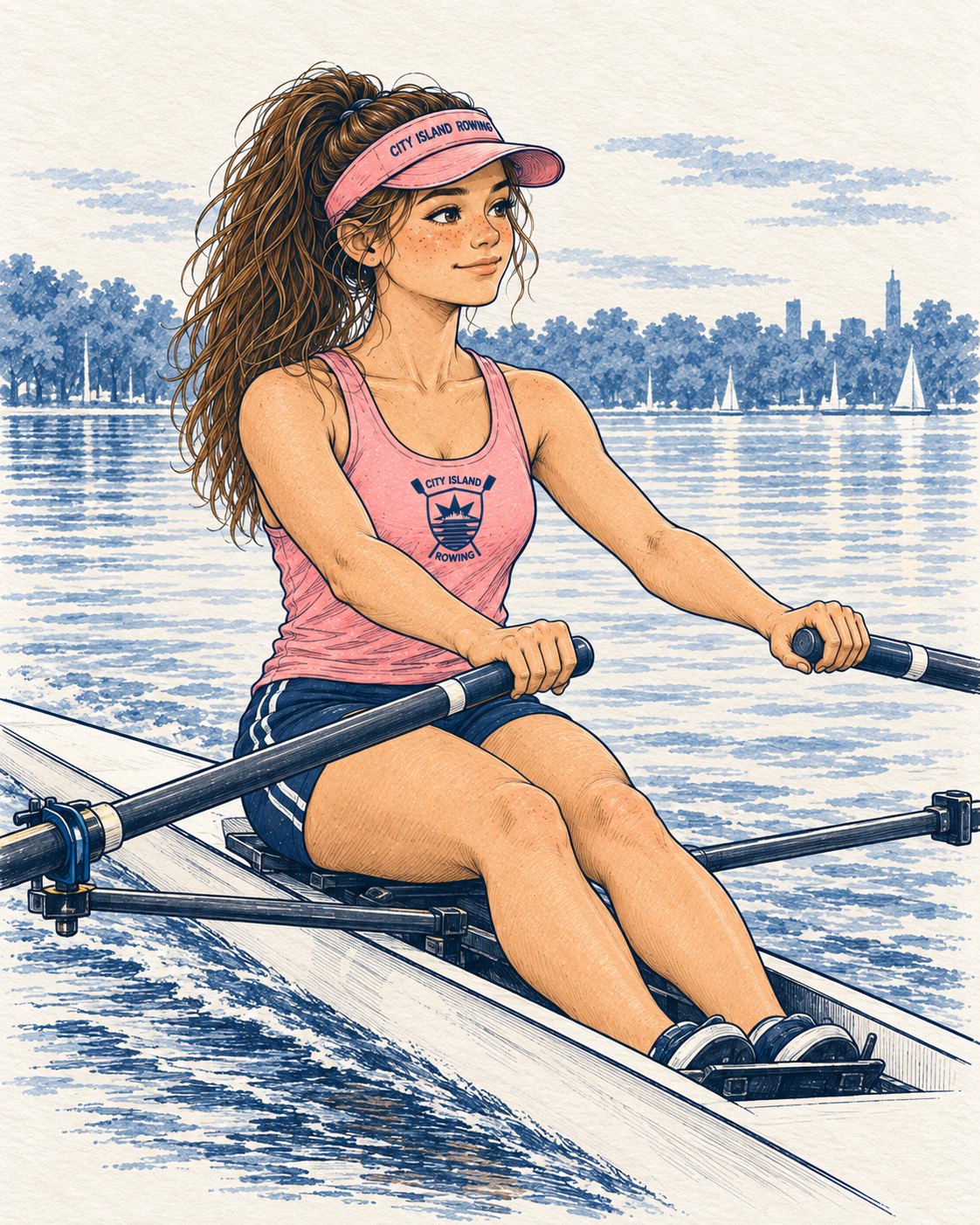
Hooked fingers, flat wrists, loose on the recovery
Clean and dry, above everything
This is the whole doctrine, and it's simple. Wash your hands after every session and any time they get dirty. Dry them completely. Then a very light dusting of medicated powder; Gold Bond is what we use. That's it.
No ointments, no creams, no balms. A blister heals in dry air, not under grease. Smothering it keeps it soft, keeps it wet, and keeps it open longer.
Let them breathe
Tape and band-aids come off during the day whenever your hands are going to stay clean, and they come off at night, no exceptions, because that's when the skin does its work. Cover a blister only when there's a real chance of dirt getting in: practice, the boathouse, sport, yard work. The rest of the time, air.
Taping for the boat
Blister tape, the thin stretchy kind you'll find at any pharmacy or online, on clean, dry skin. One layer, smooth, with the ends anchored around the finger or the wrist so it doesn't roll up under the handle. Tear it off afterward, wash, dry, powder.
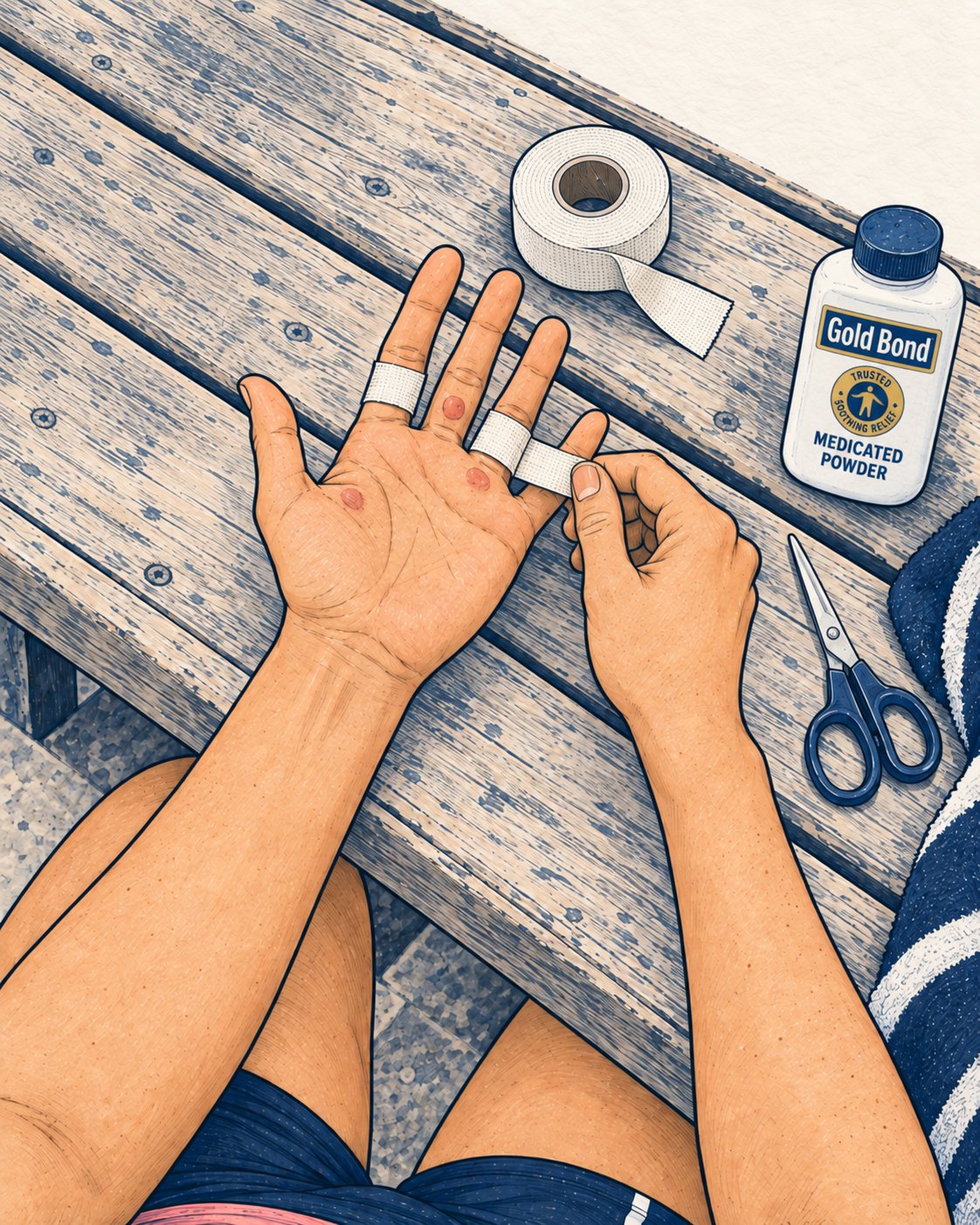
Tape, scissors, powder. Nothing else.
Open blisters and flaps
Leave the roof on if it's intact; it's the best dressing there is. If it's torn, trim the loose flap cleanly with scissors so it can't catch, then wash, dry, powder, and cover only for rowing.
Red, or spreading?
Most blisters are a bit red. Red on its own is irritation, not infection. The question is whether the red is growing.
The pen test answers it. Before bed, draw a line around the red area with a pen. If the red has crossed the line by morning, it's spreading, and you should suspect infection. That's the moment, and the only moment, for antibiotic ointment: bacitracin on the blister, and the same day you tell your coach and your parents. If it keeps getting worse, or there's heat, swelling, or pus, see a doctor. Until you suspect infection, stay with the powder.
The quarter rule
Any blister bigger than a quarter is taken seriously from the start: mentioned to a coach, watched daily, never rowed on raw.
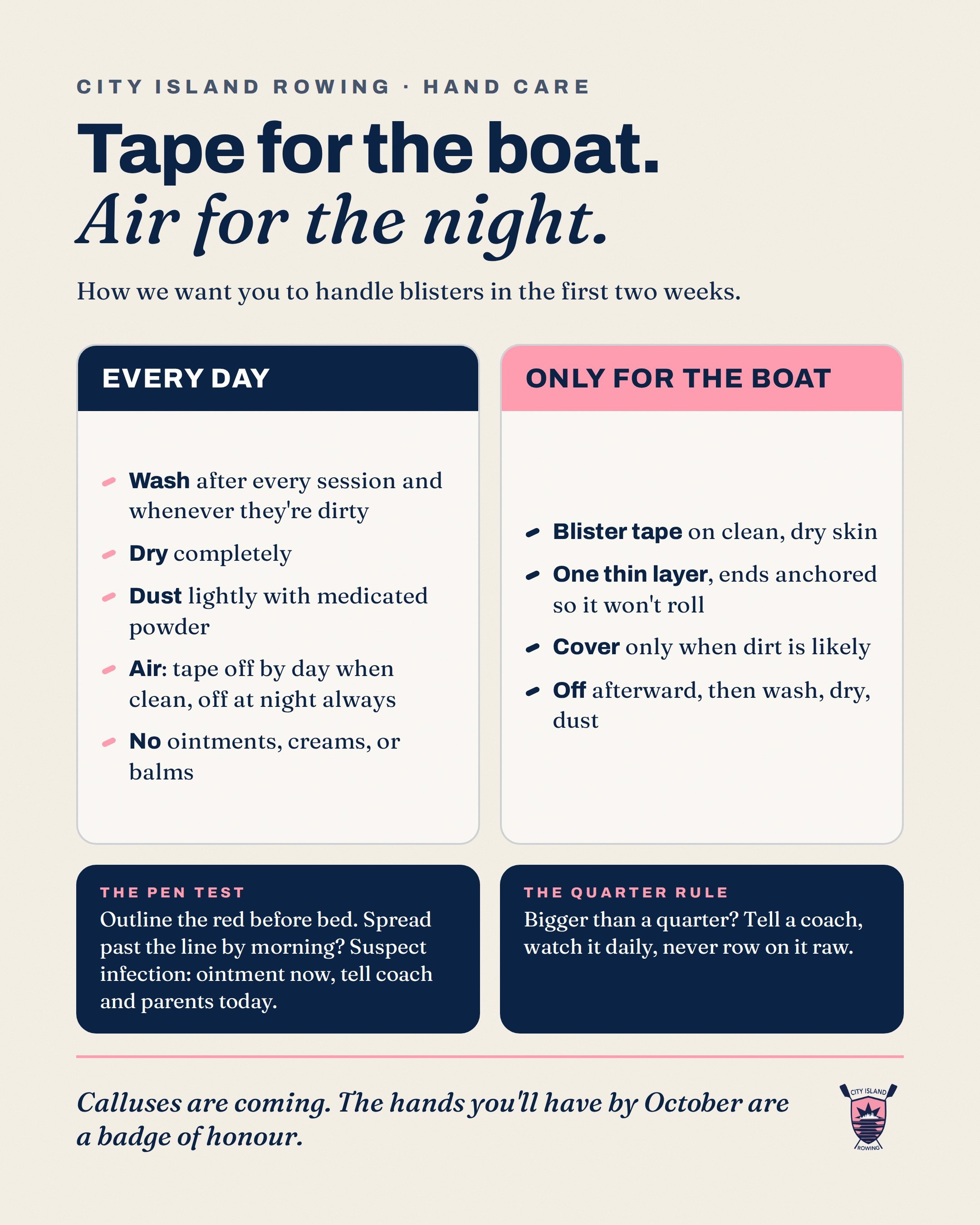
Save this one for the boathouse wall
Calluses are coming
Here's the good news. Over the next few weeks your hands will build calluses, and the blisters will get rarer and smaller until they mostly stop. Calluses are the sport's gift to people who keep showing up. They're part and parcel of rowing, and without being too glib about it, the hands you'll have by October are a badge of honour.
Clean, dry, powdered, and uncovered whenever you safely can. Tape for the boat, air for the night, the pen test for anything red, ointment only if you suspect infection. And tell someone: an infected hand kept quiet costs weeks; one mentioned early costs a day.
Tape for the boat. Air for the night.