
Rowing asks more of your body than almost any sport a teenager can pick. A race is five to eight minutes at close to maximum effort, every energy system firing at once, and getting there takes long hours of training, often two sessions a day between the water and the gym. You cannot do that on a bagel and vibes. Food is training equipment. Here's how to use it.
Carbohydrate is the fuel
Your muscles run on glycogen, which comes from carbohydrate: bread, rice, pasta, oats, potatoes, fruit. Every hard session drains the tank, and if you don't refill it you row the next session on fumes, feel flat, and blame yourself for a bad piece that was really an empty stomach.
So a rower's plate is carbohydrate-heavy, especially around training. Energy-dense snacks you can carry are the trick for getting enough without feeling stuffed: cereal or muesli bars, yogurt, fruit bread or an English muffin with a thick spread of peanut butter or honey, bananas, flavored milk, juice. Something small before an early practice, something within an hour after.
Protein is the builder
Carbohydrate fuels the work; protein repairs it. Every cell in your body is made of protein, and muscle is in a constant cycle of breaking down and rebuilding. If you don't eat enough, your body borrows from its own stores, which for an athlete means losing the muscle you trained to build.
Most young rowers eat far less protein than they should. The target is about 0.7 grams per pound of bodyweight per day, spread across the day rather than piled into dinner. Eggs, chicken, fish, Greek yogurt, milk, beans, tofu, nuts. There's a whole post on this next week.
Water, measured
Rowers lose a lot of fluid: long sessions, sun, wind off the Sound. The simplest way to know how much is to weigh yourself before and after a session. For every pound you're down, drink 20 ounces. Start every session hydrated, carry two bottles, and sip at every break rather than gulping at the end. On hot days, long sessions, or hard training weeks, a sports drink earns its place because it replaces carbohydrate and electrolytes along with the water.
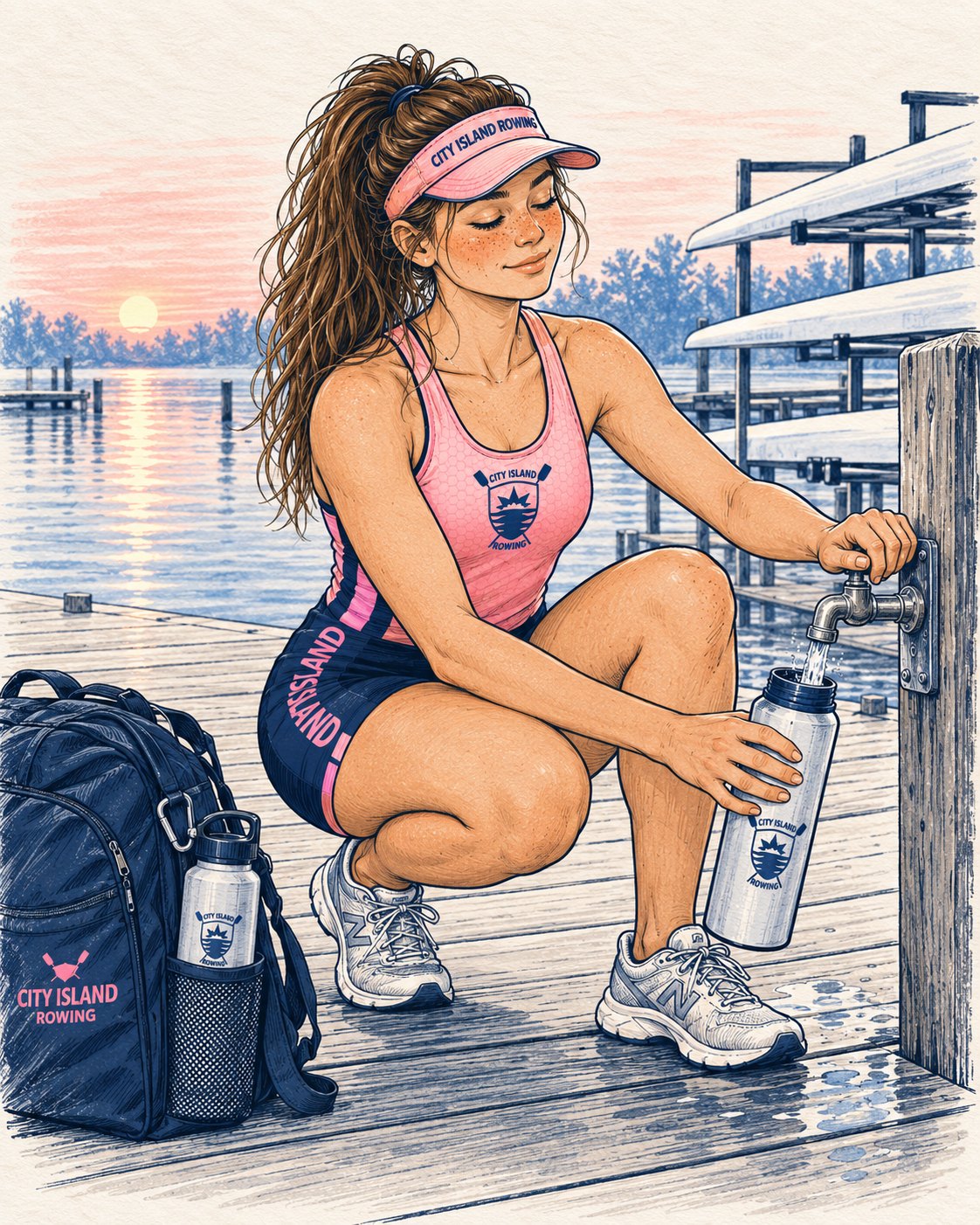
Two bottles, filled before you launch
Race day
The pre-race meal has one job: fuel you without sitting in your stomach. That means high carbohydrate, low fat, low fiber, and nothing you haven't eaten before. Cereal and milk, fruit and yogurt, an English muffin with jam, a sandwich with a little lean meat or cheese. If nerves kill your appetite, drink your breakfast: milk or a smoothie goes down when toast won't. An hour before the race, a small top-up: a bar, a banana, dried fruit.
Between races is where most rowers get it wrong, because it's chaotic and nobody's thinking about food. The rule is simple: the shorter the gap, the simpler the fuel.
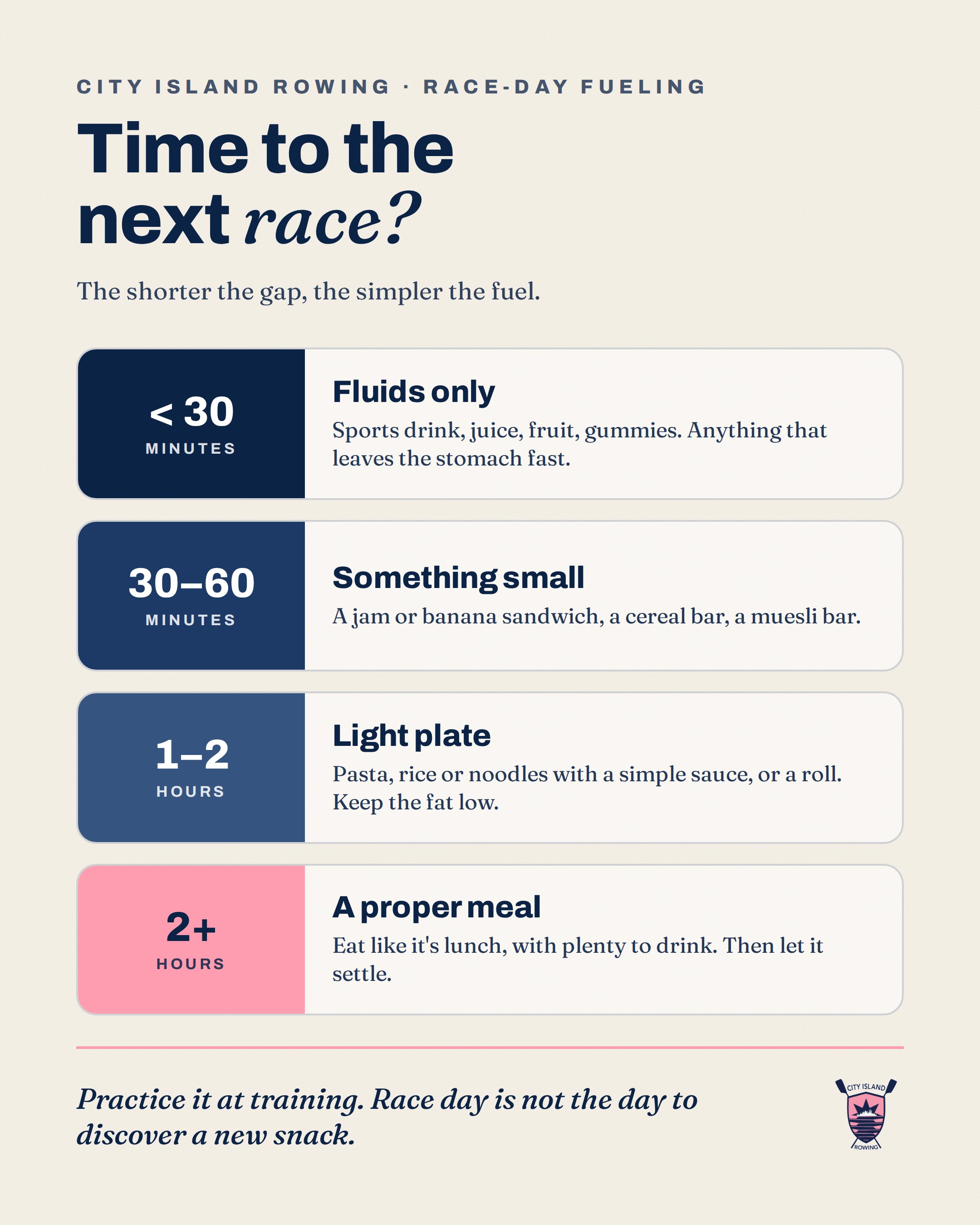
Screenshot this for the regatta tent
Practice this at training so it's automatic on the day. Race day is not the day to discover a new snack.
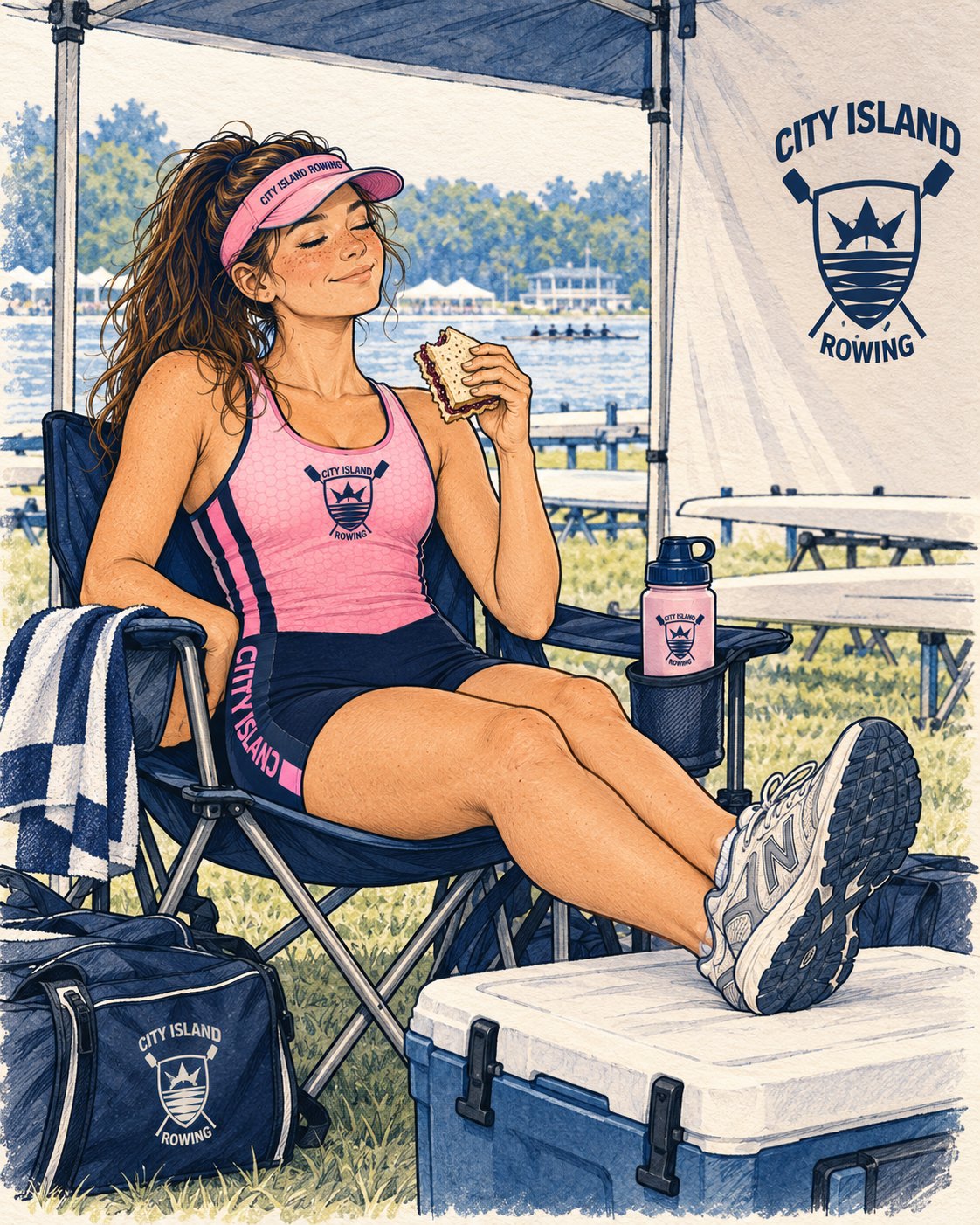
Between races: shade, feet up, something simple
Recovery
After the last race, recovery eating loses out to loading the trailer, watching friends race, and the drive home, unless you plan for it. Have something within the first half hour: a sports drink, fruit, a sandwich, a cereal bar, chocolate milk. Then a real meal within two to four hours. On a multi-day regatta or in a heavy training block, this is the difference between racing well on Sunday and racing tired.
Carbohydrate before and after every session. Protein at every meal. Water measured, not guessed. Race-day food practiced at training. Do that and the fitness you've built actually shows up on the water.
Fuel the work. Then do the work.