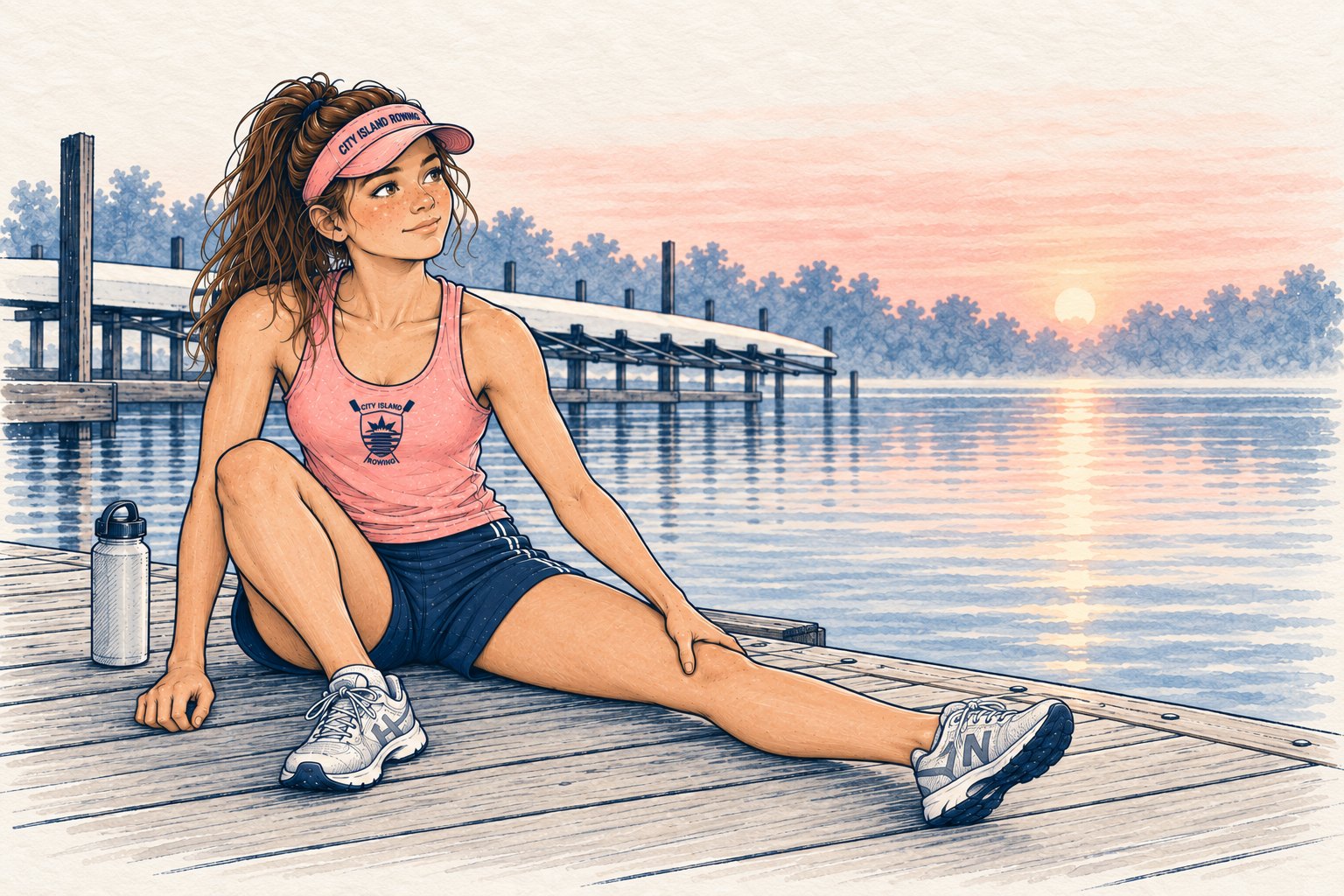
Circle up. This isn't the flashy conversation, but it may be the most important one of your athletic career, because you cannot be great if you don't understand your own body.
Some of you push through everything until something snaps. Some of you stop at the first sign of discomfort. The athletes who last do neither. They can tell the difference between tired, sore, and injured, and they respond the right way every time.
Tired: the engine's empty, not broken
Tired is your body saying, "This is hard, but I can do it." It's normal, it's expected, and it's how you get faster.
You know you're tired when your breathing is heavy but settles quickly, your legs feel like lead but nothing is sharp, you can still row, run, and lift, just slower, and the fatigue is everywhere rather than in one spot. It disappears with water, food, and sleep.
When do you push through tired? Always, unless it crosses into pain. Tired is where toughness gets built.
Sore: your muscles talking, not screaming
Soreness means your muscles were challenged and are rebuilding stronger. It usually arrives 24 to 48 hours after hard training; the textbook name is delayed onset muscle soreness, DOMS. It comes from tiny micro-tears in the muscle, from muscles working in new or deeper ranges, and from the byproducts of hard work that your body is still clearing.
Sore feels like a dull ache and stiffness. It's on both sides of the body. It eases as you warm up, and it's a little better each day.
You reduce it with the boring things: a real warm-up, water, a proper cooldown, light movement the day after, and food. Don't sit down the moment practice ends. Walk, stretch, breathe, then eat.
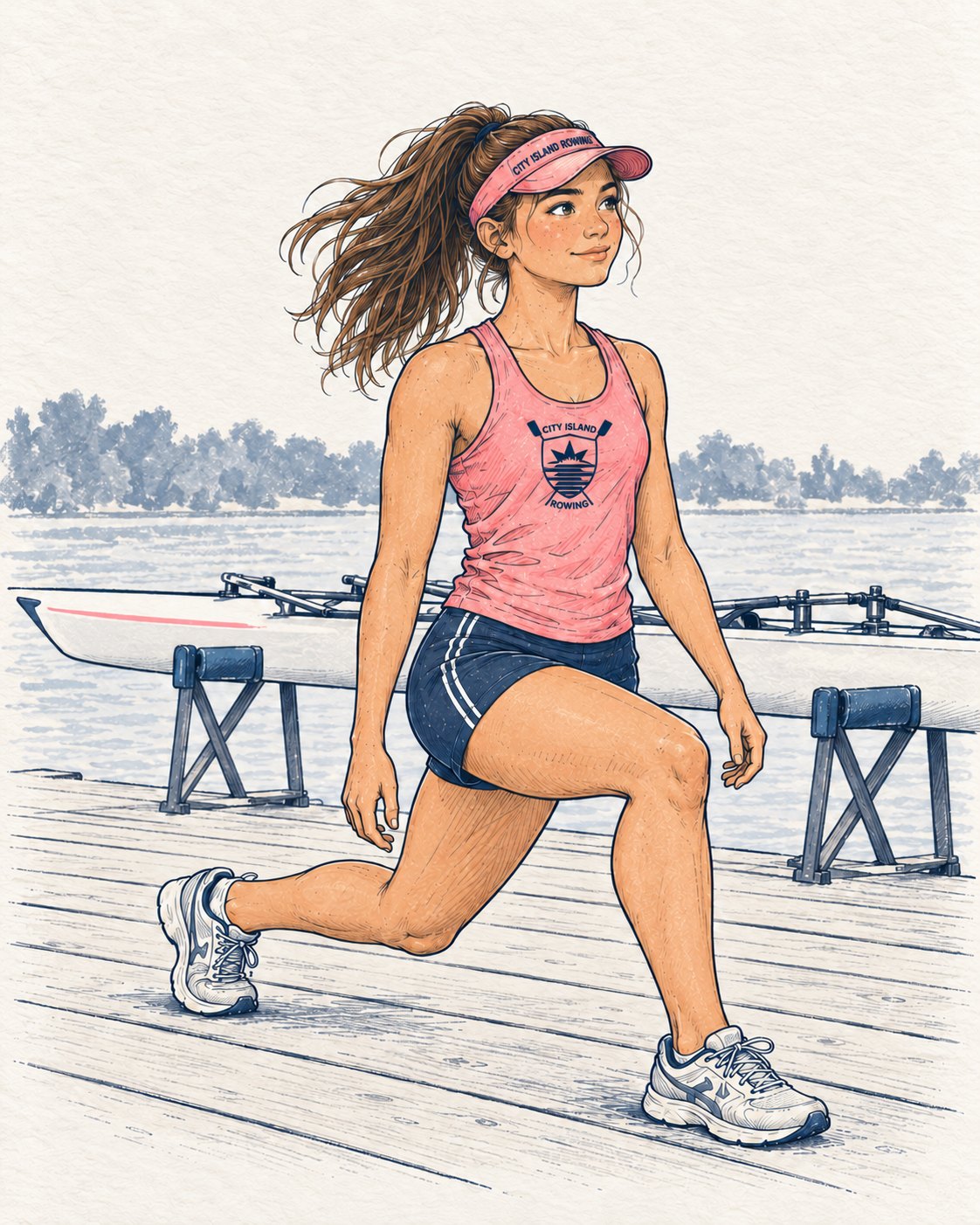
Warm up with movement, cool down with holds
Injured: your body's red flag
Injury pain is your body shouting, "Stop, or this will get worse." Ignoring it is how a small problem becomes a season-ending one.
Injured feels sharp, stabbing, or electric. It's on one side only. It gets worse as you move rather than better. There may be swelling, heat, or redness, or a joint that feels like it wants to give way. And it does not warm up out.
Stop immediately for a pop, something giving way, instant sharp pain, or swelling that appears fast.
Stopping is not quitting. Stopping is leadership. Athletes who hide injuries hurt their crew later.
The honest athlete test
Honesty runs both ways. Ask yourself one question: am I stopping because it's hard, or because it's harmful?
If it's everywhere, fatigue-based, and eases with rest, you're tired. Keep going. If it's sharp, one-sided, and changes how you move, you're hurt. Stop.
Don't fake injury. Don't fake toughness either.
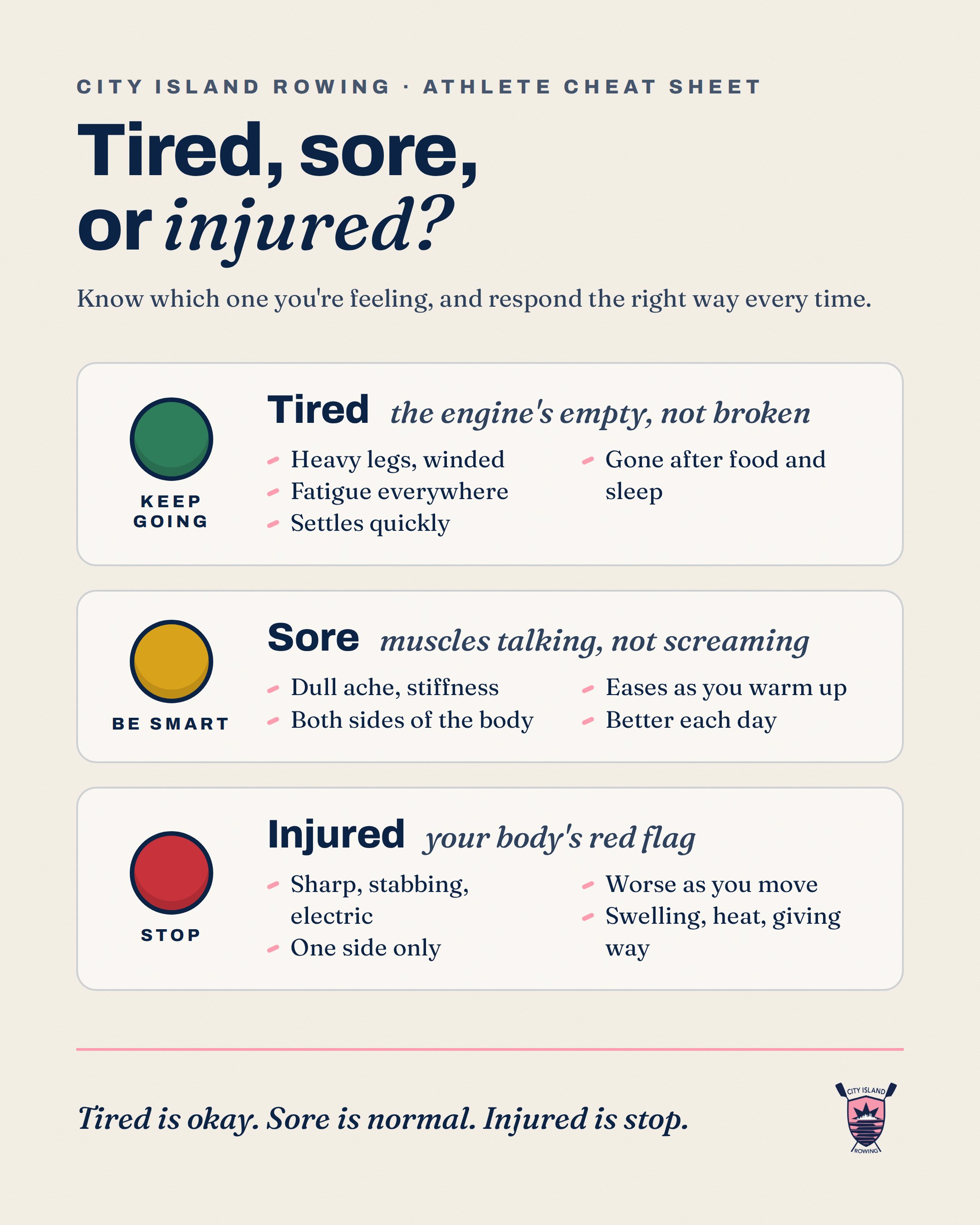
Save this one to your phone
Stretching: the most underrated superpower
Stretching isn't extra. It's performance insurance, and most teenage athletes do it halfway or skip it.
Before training, stretch with movement: leg swings, walking lunges, high knees, hip openers, arm circles. That raises muscle temperature, gets blood moving, and prepares your joints for load. Cold muscles are the ones that pull.
After training, hold your stretches: hamstrings, quads, hip flexors, calves, shoulders and back. That's what keeps you mobile next week and takes the edge off tomorrow's soreness. Skipping the cooldown is the fastest route to both soreness and injury.
Sleep: where you actually get stronger
You don't grow during the workout. You grow during recovery, and most of that happens asleep. Muscle fibers repair, growth hormone spikes, your brain files away the motor patterns you drilled, and inflammation comes down.
Athletes your age need eight to ten hours. Yes, seriously. Champions sleep; everyone else scrolls.
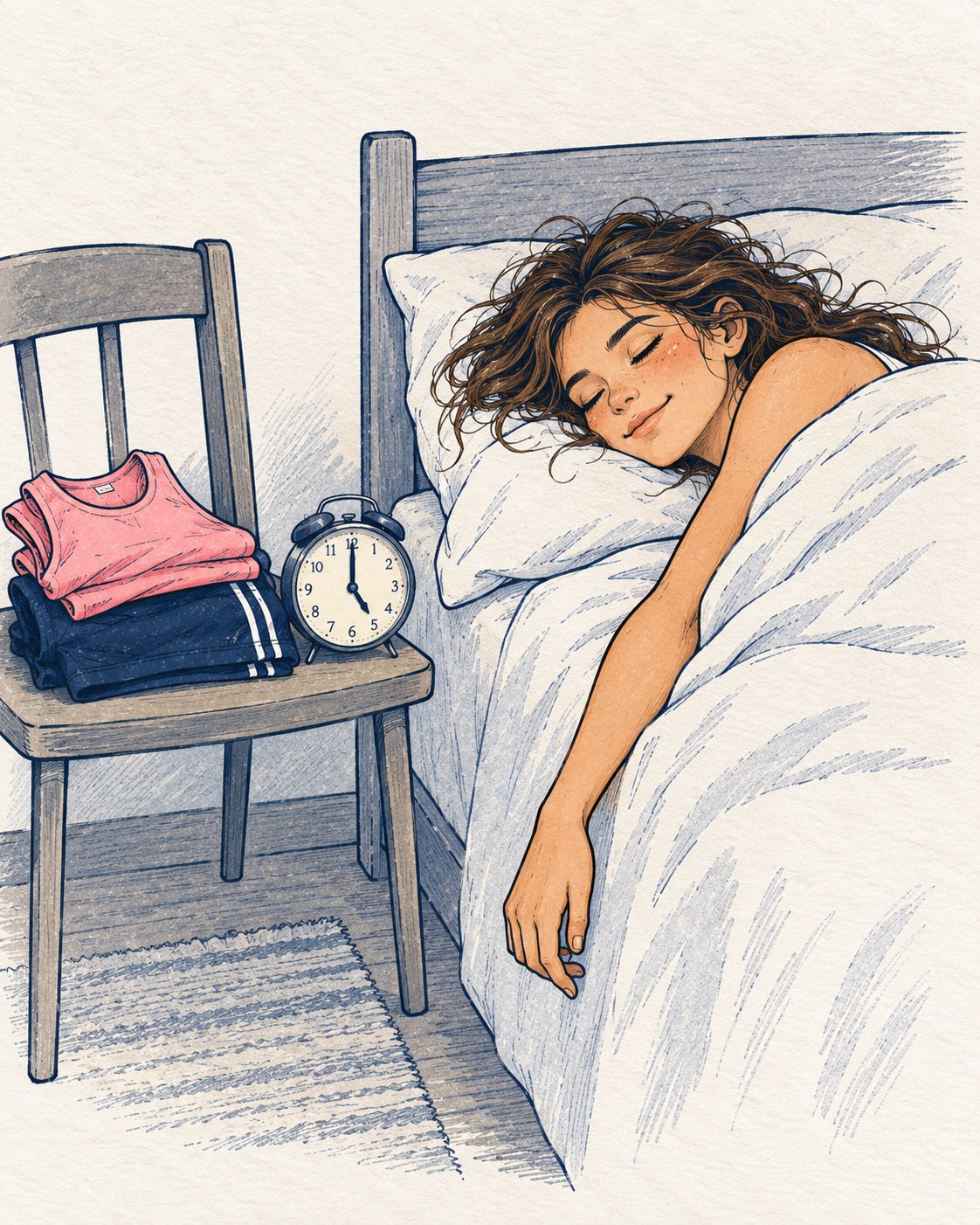
Kit on the chair, alarm at five, eight hours in the bank
Fuel the repair
Your body is a chemistry lab as much as a machine, and recovery needs materials. Three things, every time.
Water, all day, not just when you're thirsty, with electrolytes on hot days and hard days. Even a two-percent drop in hydration shows up in your performance.
Protein within an hour of training, 20 to 30 grams, to rebuild what you just broke down.
Carbohydrates to refill the tank so you aren't gassed tomorrow: fruit, rice, oats, bread.
Greek yogurt and berries, a smoothie and a banana, a turkey sandwich, chocolate milk. All of them work. Eat like an athlete and you'll recover like one.
You don't need to be fearless. You need to be body-aware. Know the difference between discomfort that grows you and pain that breaks you. Train smart, recover smarter, be honest, be tough, be protective, and build habits that keep you in this sport for years, not weeks.
Tired is okay. Sore is normal. Injured is stop.
Hydrate. Stretch. Sleep. Repeat. Now let's go be great.