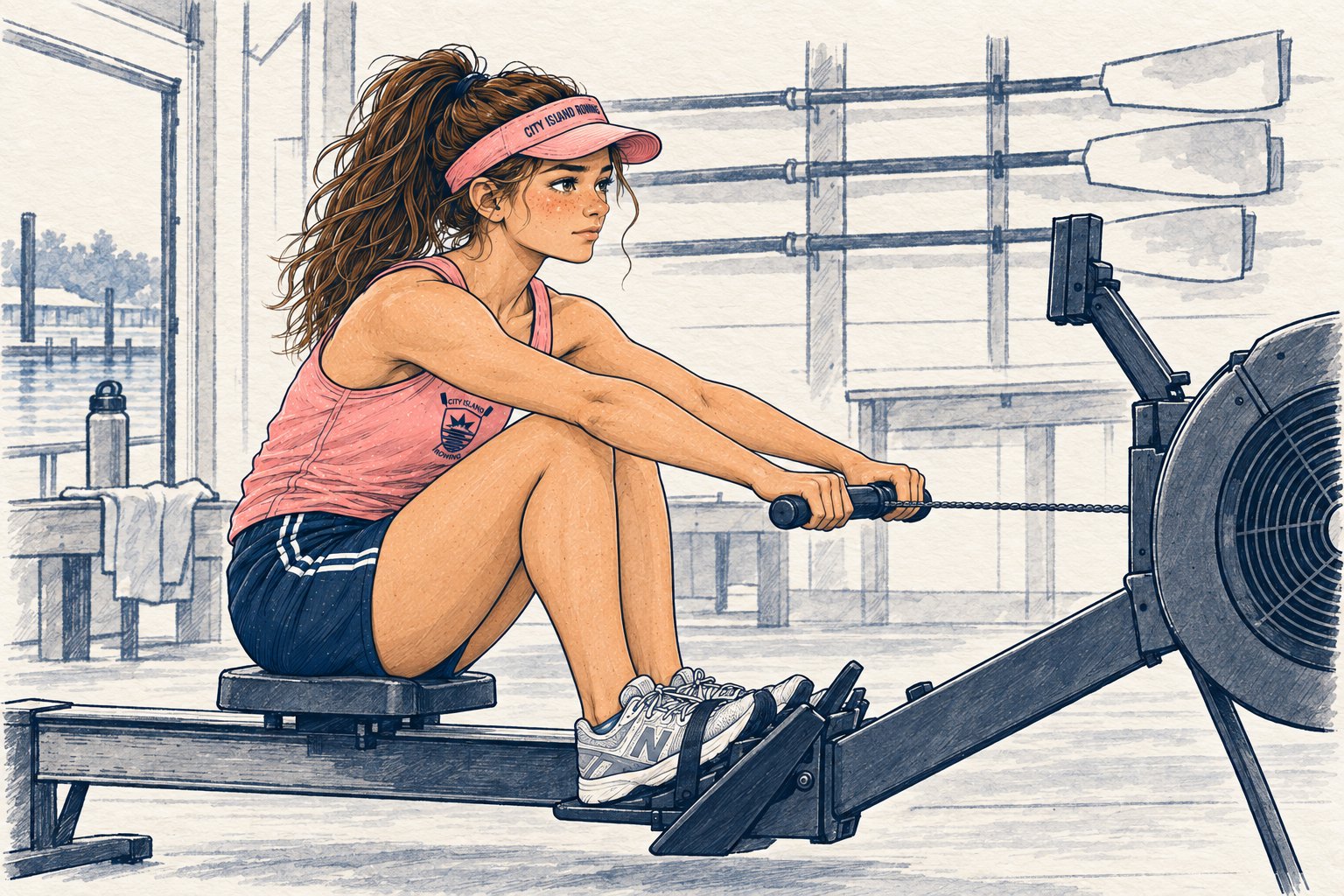
Every stroke you take, you fold your body almost in half and open it again, twenty-plus times a minute, for an hour, several days a week. Then you go to school and sit for six hours. Then you sit to do homework. The muscles that pay for all that sitting and folding are your hip flexors, and if you don't look after them they'll take you out of the boat.
Hip flexor trouble is one of the most common injuries in rowing, because the sport is repetitive, linear, and seated. Caught early, it's a nuisance. Ignored, it becomes low back pain, then a season on the sidelines, and in the worst cases surgery. So here's what's going on in there, how to spot it, and the five minutes a day that keep you rowing.
What the hip flexors are
They're the group of muscles at the front of your hip that lift your knee toward your chest. The big one is the iliopsoas, which runs from your lower spine, through your pelvis, to the top of your thigh bone. Your adductors, the groin muscles on the inside of the thigh, help too, mostly by keeping the hip stable while you move.
On the erg or in the boat, these muscles work hardest on the recovery, pulling you up the slide into the catch. That's thousands of contractions a session, in a shortened position.
Why sitting is the problem
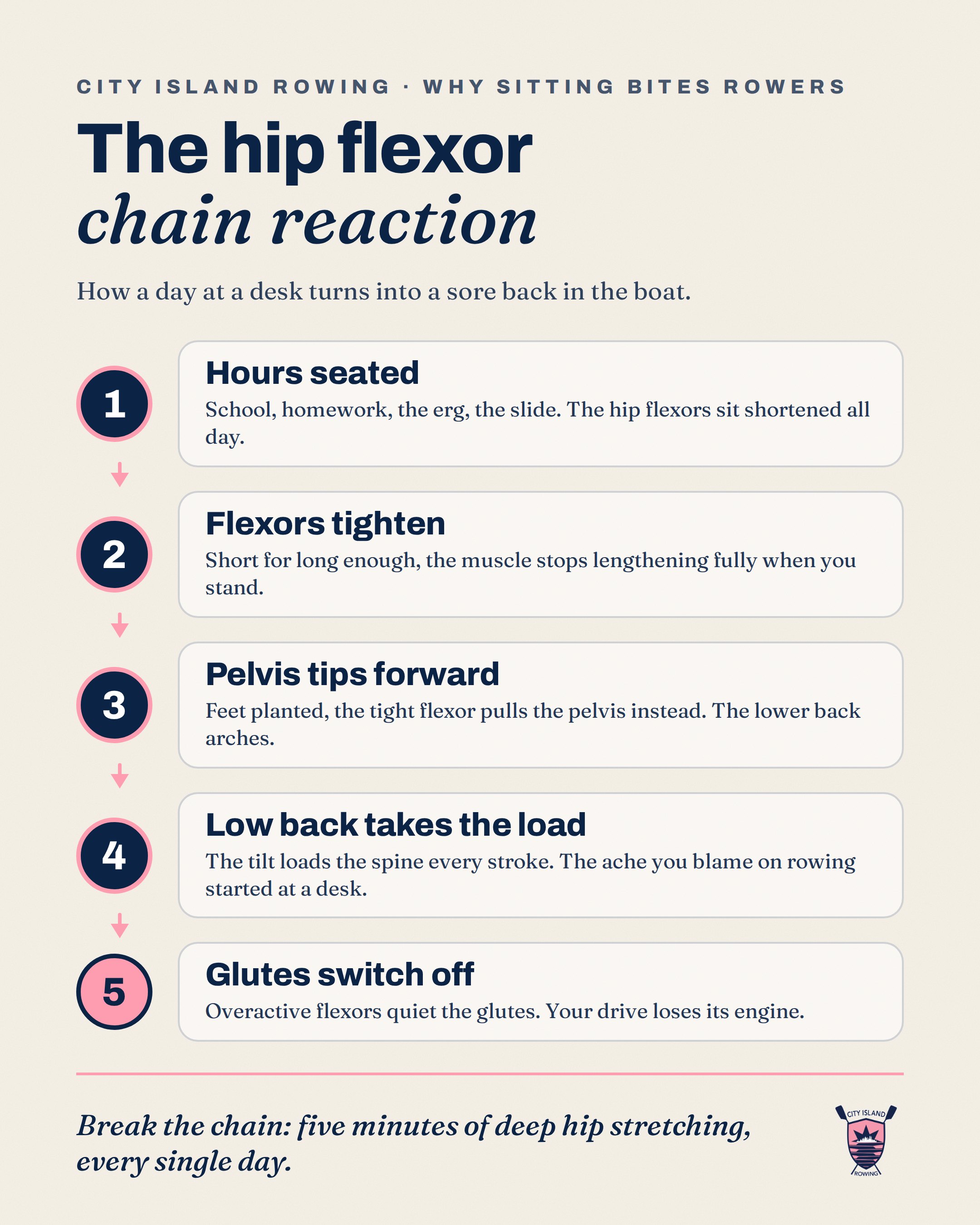
When you sit, the hip flexors are short: their two ends are close together, and over hours they start to stay that way. When you stand up, a shortened flexor can't lengthen fully, so it pulls on whatever it's attached to. Your feet are planted, so it can't lift your leg. Instead it tips your pelvis forward, which arches your lower back. That's anterior pelvic tilt, and it's the first domino.
Tip the pelvis forward long enough and the flexors get tighter still, the tilt gets worse, and the low back starts to complain. Meanwhile the glutes, which should be the powerhouse of your drive, get switched off, because when one side of a joint is overactive the other side goes quiet. Weak glutes and an overworked back is exactly the wrong combination for a rower.
The chain, and where to break it
How to spot it early
Pain or a deep ache at the front of the hip, especially at the catch. Tightness that makes it hard to stand up straight after sitting. A lower back that aches after practice or after a long day at a desk. Difficulty getting full compression without your back rounding. Any of those is your hip flexors asking for attention, and the low back one is the sneaky one, because most rowers blame the back when the hips are the cause.
Sharp pain, pain on one side only, or pain that gets worse as you row is the injured category from last week's post. That's a stop, and a conversation with your coach.
The five minutes that keep you in the boat
Deep hip flexor stretching, every single day, not just on rowing days. Hold each for 45 to 60 seconds a side, breathe, and stay relaxed; you're asking the muscle to let go, not fighting it.
Half-kneeling hip flexor stretch. One knee on the ground, the other foot forward. Squeeze the glute on the kneeling side and shift your hips forward until you feel it in the front of the hip. Keep your ribs down and your back neutral; if your back arches, you've lost the stretch.
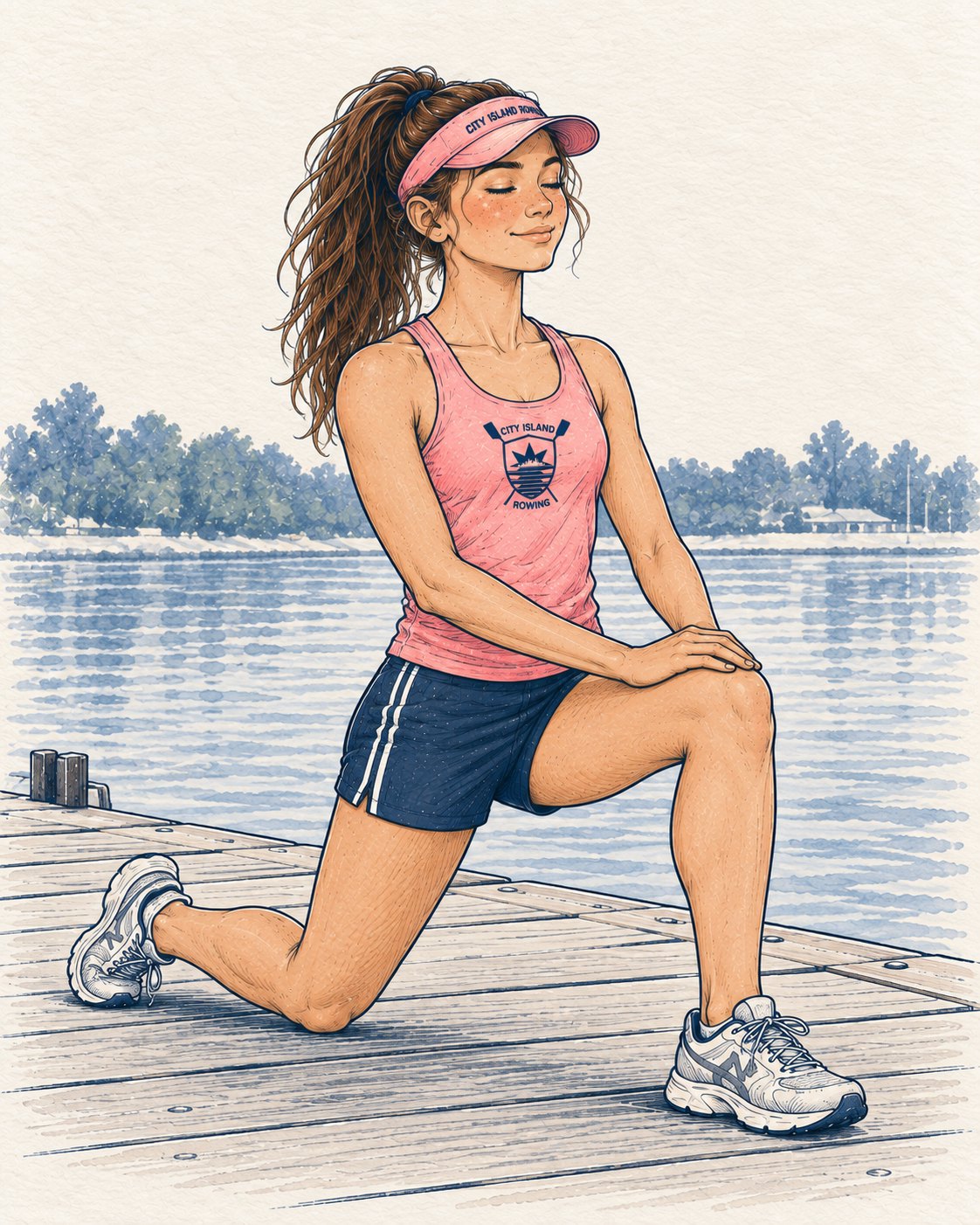
Half-kneeling: hips forward, ribs down, glute on
Couch stretch. Same idea, but the back foot goes up against a wall or a bench behind you. This one reaches the quad and the flexor together and is the most effective stretch in the set. It's also the one everyone skips because it's uncomfortable. Do it anyway.
Figure-four. Lie on your back, cross one ankle over the opposite knee, and pull the bottom leg toward you. That's the glute and the outer hip, the muscles that need waking up once the flexors let go.
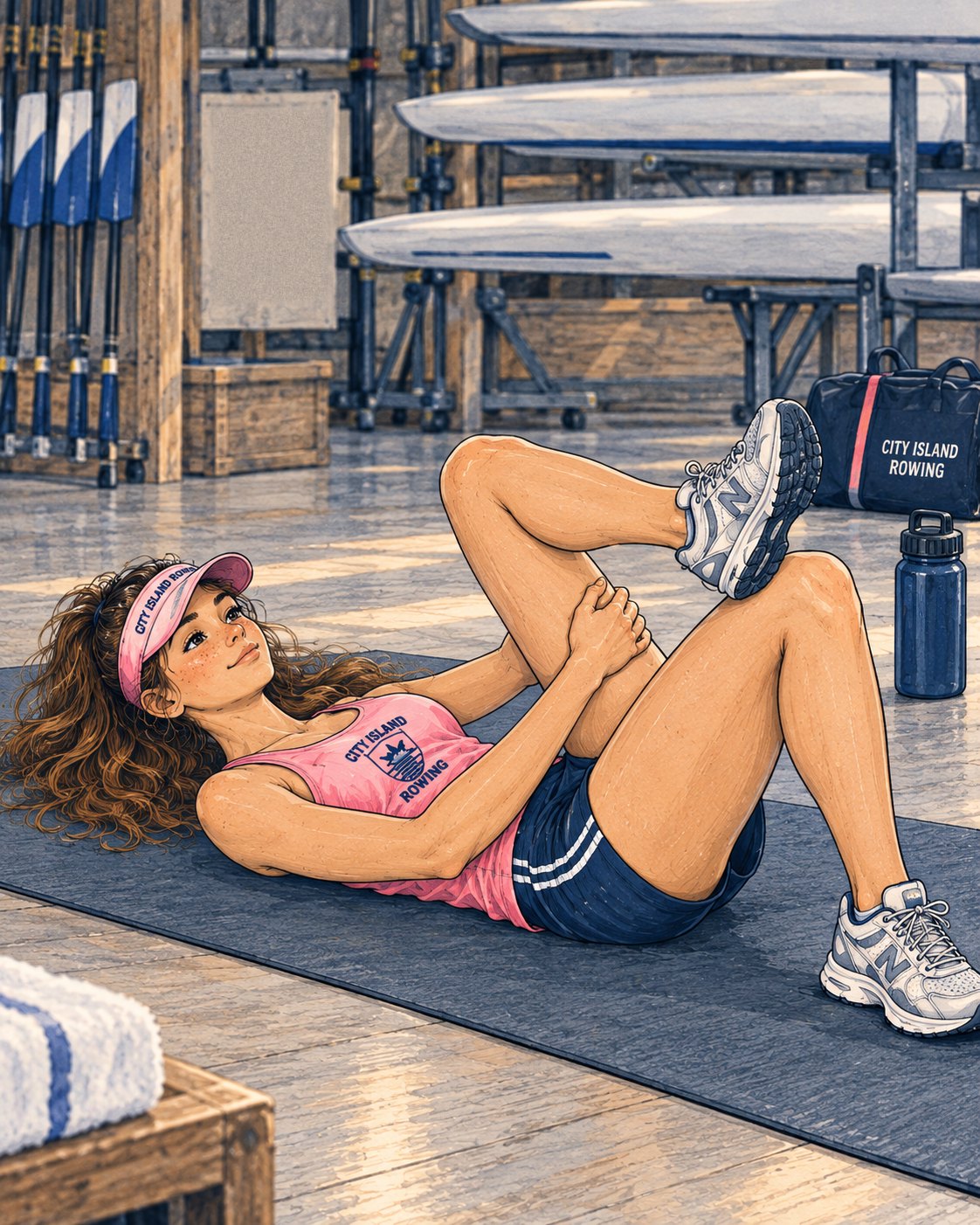
Figure-four: wake the glutes back up
Finish with ten slow glute bridges. Stretching lengthens the flexors; bridges remind the glutes that they have a job.
When to get help
If the pain is persistent, getting worse, or changing how you row, see a physiotherapist. A good one will find the root cause, usually a mix of tightness, weakness, and technique, and give you a plan. Hips can also develop bursitis or labral tears, which feel different (deeper, clicking, catching) and need a proper diagnosis. Don't guess with a joint.
You're a rower. Your hips fold and open more times in a week than most people's do in a month, and then you sit all day. Five minutes of deep stretching every day is the cheapest insurance in the sport. Skip it and the bill arrives as a bad back and a lost season.
Stretch your hips. Wake your glutes. Every day.