
Last week was fuel. This week is the material your body builds with. Every rower knows protein matters; almost none of them eat enough of it, and the ones who do usually eat it all at dinner, which is the least useful time. Here's what protein actually does for an athlete, how much you need, and the easy way to get there.
What it is
Proteins are long chains of amino acids, the way words are built from letters. Your body makes thousands of different ones, and each has a job: muscle fiber, hormones, the chemicals your brain runs on, the cells of your immune system, skin, hair, bone. Every one of those is being broken down and rebuilt all the time, and the rebuilding needs amino acids from food.
For a rower the job that matters most is muscle. Muscle tissue is made of two protein filaments, actin and myosin, sliding past each other every stroke. Hard training damages them, on purpose. Repairing that damage, slightly stronger each time, is how you get faster. Protein is the repair material. Without enough of it, the damage outruns the repair and you train hard to get weaker.
How much
The target for a young, growing, training athlete is about 0.7 grams of protein per pound of bodyweight per day. A 140-pound rower needs roughly 100 grams. Most teenagers eat half that and get most of it at dinner.
The other half of the rule is timing. Your body can only use so much at once, so spread it across the day: 20 to 30 grams at breakfast, at lunch, after practice, and at dinner. Four hits beats one pile. And the window after training matters most: protein within an hour of stepping off the erg or out of the boat is what turns the session into strength.
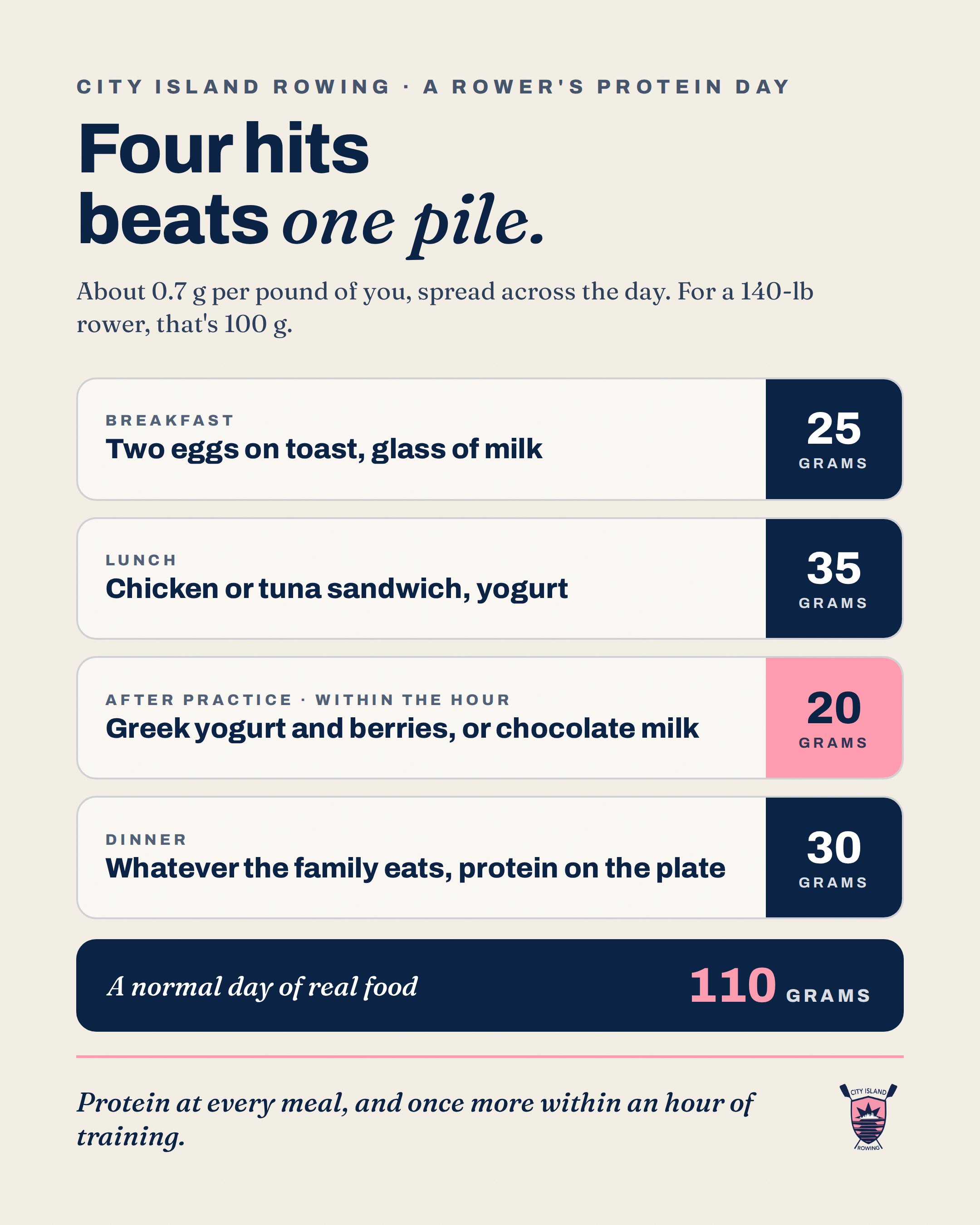
A normal day of real food gets you there
Where it comes from
Real food first. Eggs, chicken, turkey, fish, lean beef. Milk, Greek yogurt, cheese. Beans, lentils, tofu, edamame. Nuts, seeds, peanut butter. Whole grains add a little too. A breakfast of eggs and toast, a lunch with chicken or tuna, Greek yogurt after practice, and a normal dinner gets a rower to 100 grams without thinking about it.
Protein powder is a tool, not a food. It's useful when you can't get a meal after practice, or when breakfast has to be drunk on the way out the door: a scoop of whey blended with milk, yogurt, and fruit is 30 grams of protein and takes ninety seconds. It is not better than food, and it doesn't replace meals. Use it to fill gaps.

The after-practice plate
The rower's protein day
Breakfast: two eggs on toast, or oats made with milk plus a spoon of peanut butter. Lunch: a sandwich with real filling, chicken, tuna, or turkey, or a rice bowl with beans and cheese. After practice, within the hour: Greek yogurt, chocolate milk, a smoothie, or a turkey roll-up. Dinner: whatever the family eats, with the protein on the plate, not beside it.
That's it. No supplements you can't pronounce, nothing measured to the gram. Just protein at every meal and one more time after training.
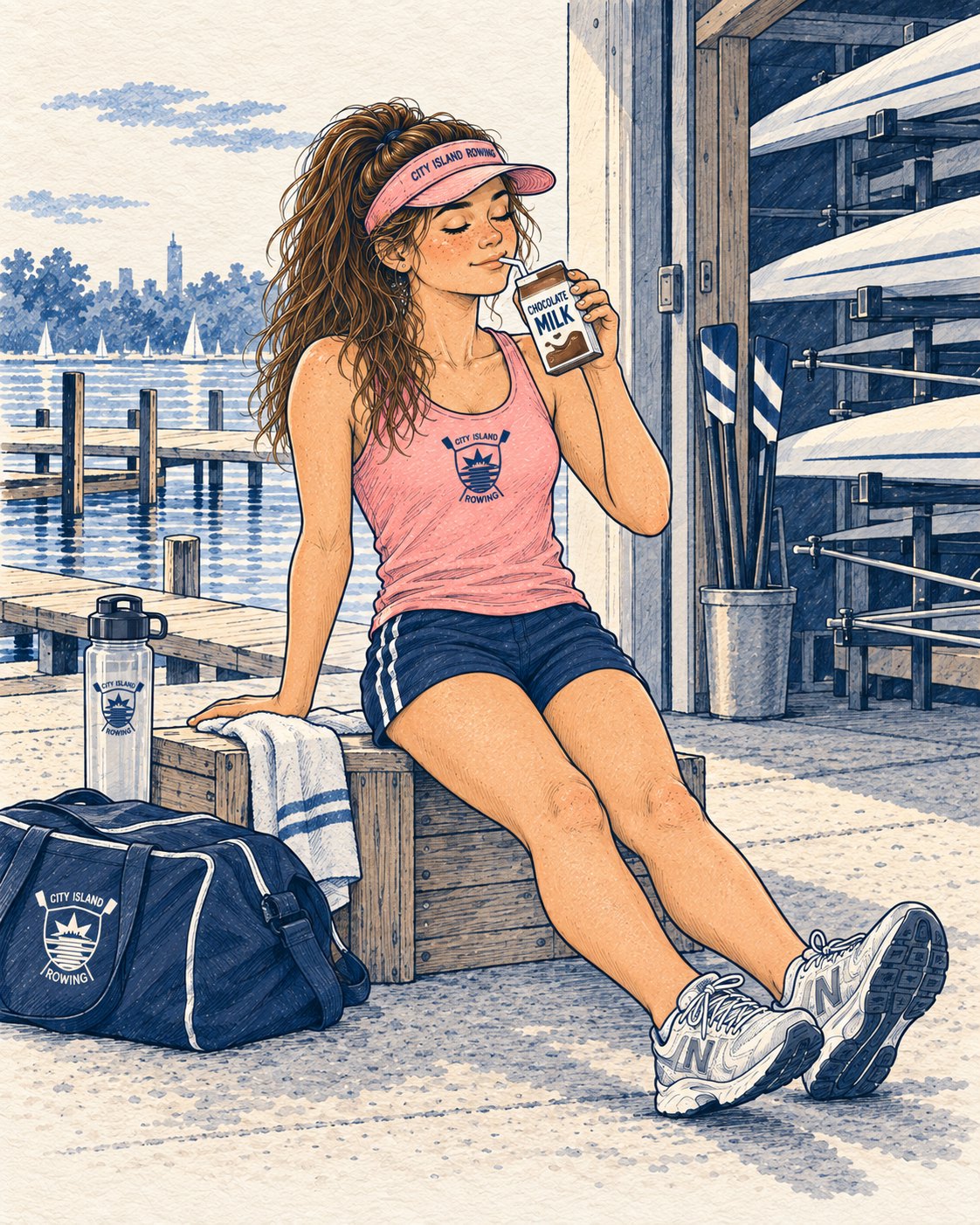
Chocolate milk counts. Yes, really.
You do the work on the water. Protein is what your body builds with afterward. Eat it at every meal, eat it within an hour of training, and aim for 0.7 grams per pound of you. Do that for a season and you'll feel the difference in the boat.
Train hard. Rebuild harder.